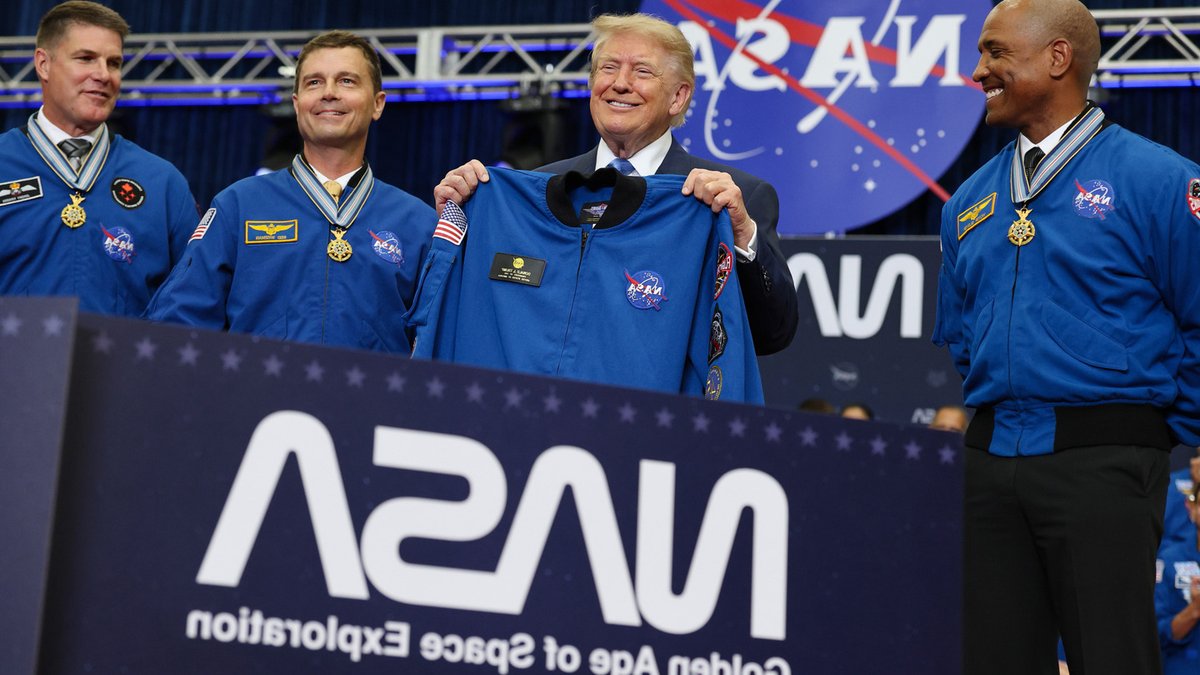
The U.S. Space Academy was formally created by an executive order signed by President Donald J. Trump on Aug. 28, 2026.
The order declares a policy to grow the nation’s space workforce by expanding education and leadership development across the space domain. It was signed at NASA’s Johnson Space Center, where the president also presented the Congressional Space Medal of Honor to the Artemis II crew. The document notes that the academy will serve as a dedicated pipeline for future space professionals. Officials said the move signals a renewed emphasis on exploration. Critics have pointed to earlier budget proposals that threatened to shrink NASA’s science programs.
No opening date has been announced.
A Presidential Commission on the United States Space Academy has been formed to shape the new institution. The commission is chaired by NASA Administrator Jared Isaacman, with NASA Deputy Administrator Matt Anderson acting as executive director. Its mandate includes recommending a site, governance structure, and foundational policies. The group will submit its report to the president within 120 days. The composition reflects a blend of agency leadership and civilian oversight.
The commission must deliver its findings by early 2027.
Related: Solar Farms Face New AI Threat
Commission tasked with shaping the new institute
Members will evaluate potential locations ranging from existing research hubs to newly built campuses. They will also consider partnerships with universities and private firms. The goal is to create a flexible framework that can adapt to evolving mission needs. Input from industry stakeholders is expected during the review process. The timeline suggests a rapid rollout once recommendations are approved.
Potential impact on the space workforce
NASA’s current astronaut eligibility page requires a master’s degree in a STEM field and at least two years of post‑graduate professional experience. Those standards limit the pool of candidates who can meet the threshold. A dedicated school could offer curricula that align with those requirements, giving more students a clear path to qualification. It may also provide hands‑on training that mirrors mission‑specific skills. It’s a bit of a weird mix of ambition and ceremony, but the practical benefits could be significant.
The concept resembles past efforts such as the 1990s Space Academy program, which aimed to inspire high school students through outreach. Those earlier initiatives fell short of creating a full‑time training pipeline, leaving a gap that the new school hopes to fill. By focusing on both academic and experiential learning, the academy could address that historic shortfall. This approach mirrors how other technical fields have built dedicated institutes to sustain talent pipelines.
During the same ceremony, the crew of Artemis II received the Congressional Space Medal of Honor, bringing the total to 34 recipients since the program began. The award shows the mission’s historical significance.
In 2025, the administration proposed cuts that would have reduced NASA’s science budget by nearly half, sparking concerns about the future of deep‑space research. Those proposals were withdrawn after public outcry and lobbying from the scientific community. The recent executive order marks a noticeable shift from those earlier cost‑saving measures. It suggests a strategic re‑evaluation of how the United States competes in space.
Related: Apple Unveils Latest iPhone Models for September
“In the years ahead, we will return NASA astronauts to the lunar surface, build the Moon Base, get underway on nuclear power, ignite the orbital economy and launch more missions of science and discovery,” Jared Isaacman said in a NASA news release.
Funding for the academy will likely come from a combination of federal appropriations and private partnerships, though exact figures have not been disclosed. The administration’s broader space budget is expected to rise modestly in the next fiscal cycle. Stakeholders anticipate that the school could become a focal point for industry collaboration. Ongoing debates about resource allocation may influence the academy’s scale.
After the commission submits its recommendations, the president is expected to sign additional directives to formalize the school’s establishment. Implementation will involve construction, staffing, and curriculum development phases. The timeline suggests that the first cohort could enroll within a few years of final approval. Observers will watch closely to see how the initiative integrates with existing NASA training pipelines.
For now, the academy remains a work in progress, with its exact location, size, and program details pending official decisions.


