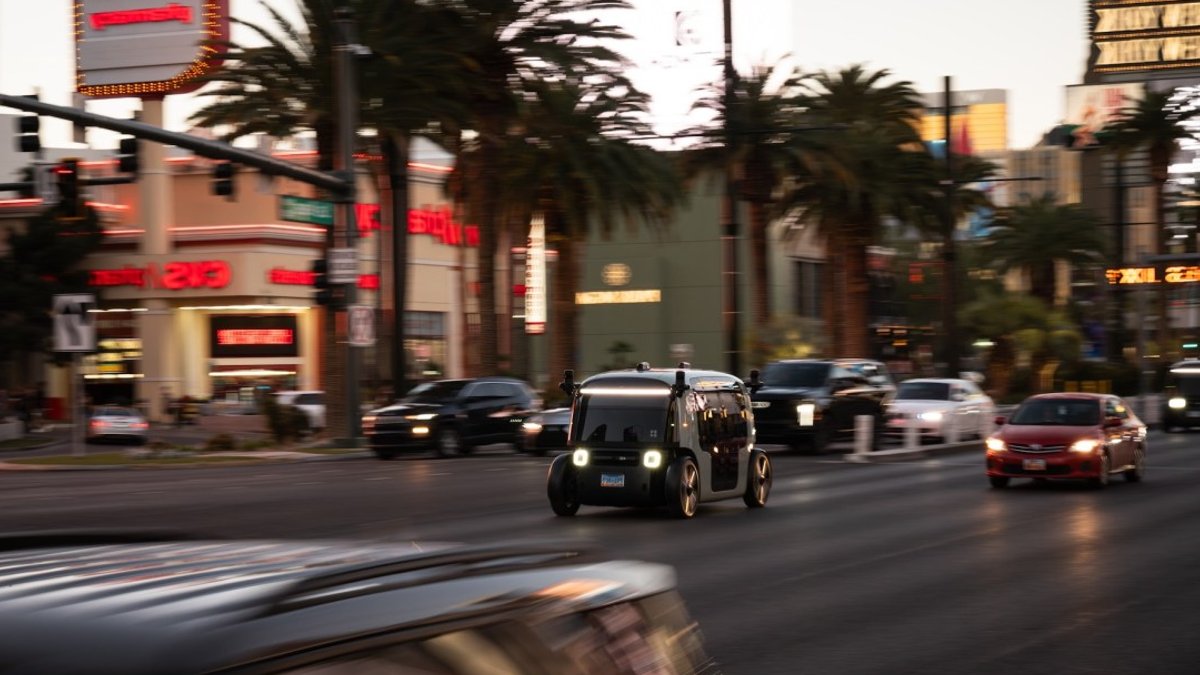
Amazon-owned autonomous vehicle company Zoox will begin charging passengers for robotaxi rides on August 10, marking its first commercial operation after years of testing. The launch follows a federal exemption granted by the National Highway Traffic Safety Administration, allowing Zoox to deploy up to 2,500 vehicles without traditional controls for two years.
The NHTSA exemption is the first of its kind for a purpose-built autonomous vehicle lacking human driver controls. Previous approvals only permitted demonstration projects. Zoox has tested its custom-designed robotaxis in Las Vegas, San Francisco, Miami, and Austin, but until now, those rides were free.
The decision creates a model for other companies developing similar vehicles. Tesla’s upcoming two-seater Cybercab could follow the same path. Other developers may now seek similar exemptions, though regulators have not signaled how widely they will apply the ruling.
The vehicles rely on external sensors for visibility, removing the need for rearview mirrors or other traditional safety features. The exemption applies only to Zoox’s specific design, meaning competitors would need to file separate applications.
Uber’s $10 billion investment in autonomous fleets
While Zoox prepares for its commercial launch, Uber is increasing its commitment to autonomous vehicles. CEO Dara Khosrowshahi confirmed during an earnings call that the company plans to spend $10 billion over the coming years to deploy 120,000 driverless vehicles. The figure matches an earlier estimate from a financial report, which calculated Uber’s total spending based on partnerships and acquisitions.
Related: X Introduces New Content Rewards Program
Uber has already integrated autonomous vehicles into its platform through agreements with Waymo, Motional, and others. The company’s strategy focuses less on building its own technology and more on controlling fleet operations and the ride-hailing network that will use it.
This shift reflects broader industry trends, where companies prioritize fleet management over in-house development. The emergence of companies like Moove, which now operates Waymo’s robotaxis in Phoenix, Miami, and Las Vegas, suggests the real competition may soon center on who controls the vehicles rather than who manufactures them.
Moove, originally an African fintech company providing vehicle financing to ride-hail drivers, has shifted into fleet ownership and autonomous vehicle operations. The company recently raised $250 million in a Series C round, valuing it at $2.1 billion. The funds will expand its autonomous fleet, including purchases of Waymo robotaxis and assets from another unnamed company.
Moove’s co-CEO Ladi Delano stated the company aims to own the vehicles, not just operate them. That goal places it in direct competition with traditional automakers and ride-hailing platforms, both racing to dominate the next phase of mobility.
Commercialization’s impact on the industry
Zoox’s launch represents a small but significant step in a larger transition. The company’s vehicles will operate only in specific geofenced areas, and its fleet size is limited to 2,500 under the current exemption. Uber’s goal of 120,000 autonomous vehicles would require many more approvals or changes in federal regulations.
Related: Atoms hires former Uber finance chief as CFO
The NHTSA exemption does not guarantee safety or scalability. It permits Zoox to operate commercially while regulators monitor performance. If the vehicles prove reliable, other companies may follow. If they fail, the industry could face stricter oversight.
For now, companies must prove the technology works in controlled environments. Zoox’s Las Vegas operations, for example, are limited to a 1.5-square-mile area near the Strip. Expanding beyond that will require regulatory approval and public trust, which has been difficult to secure after high-profile accidents and delays.
In California, the Teamsters union sued the state’s Department of Motor Vehicles. The lawsuit claims the agency did not study the economic impact of allowing self-driving heavy-duty trucks on public roads. The case reflects growing labor concerns about job losses, which could influence future regulations.
For Zoox, the next few weeks will be key. The company’s ability to convert test rides into paying customers will test whether autonomous taxis can move beyond novelty and become profitable. Success could speed up the industry’s shift toward commercialization.
Hotel deals for Disrupt 2026 are now available for attendees planning to discuss these developments in person.


