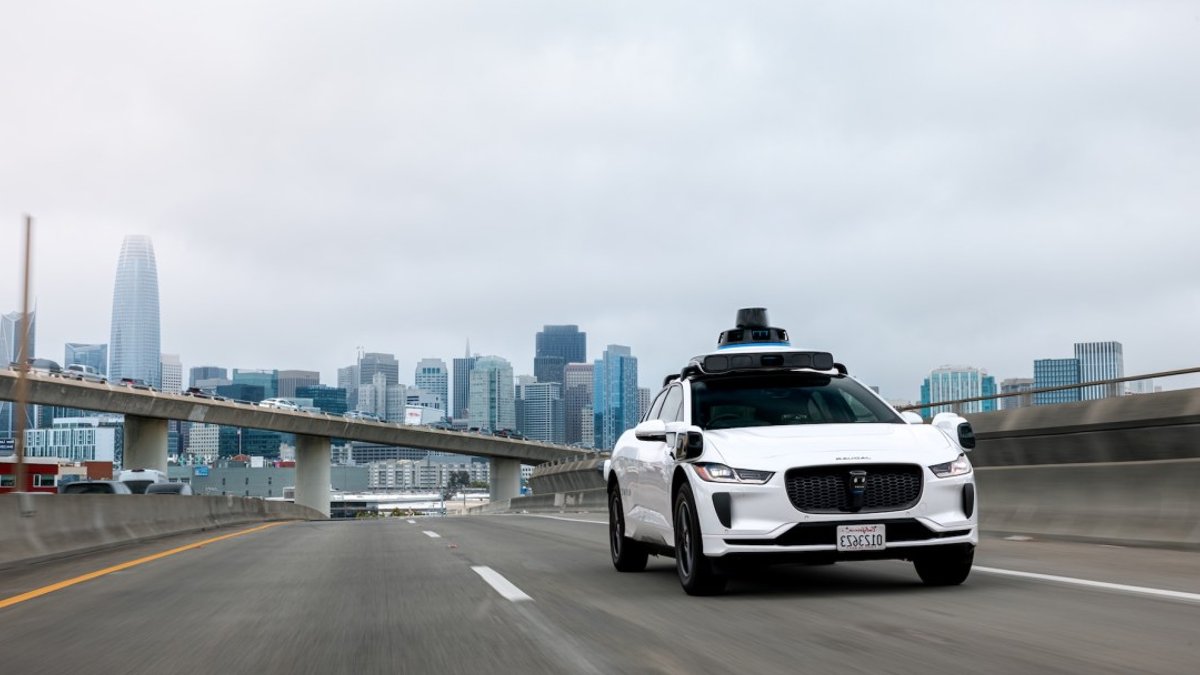
Waymo robotaxis are starting to return to freeways after a two-month pause caused by the vehicles’ behavior near construction zones.
Return to Phoenix and Los Angeles
Waymo announced Wednesday that it would gradually restore freeway routes, starting in Phoenix. Los Angeles and the San Francisco Bay Area would follow in the coming days, a company spokesperson confirmed to TechCrunch. The operator resumed service across its entire service area after implementing software updates designed to improve performance around highway construction zones.
The software updates included enhanced scene recognition and routing, according to the company statement. The return of these routes marks a shift for the autonomous vehicle operator, which paused operations in May to fix technical issues.
Related: Mark Zuckerberg’s Vision for Personal AI Agents (2026 Guide)
Federal scrutiny and past recalls
The freeway pause and its restart come amid increased scrutiny into Waymo and other robotaxi operators. This scrutiny centers on how these self-driving vehicles behave in high-traffic situations and around emergency responders.
Earlier this week, Rep. Kevin Mullin (D-Calif.) proposed a bill that would direct federal regulators to establish minimum national safety standards for autonomous vehicle operators. The proposal follows a number of incidents in which autonomous vehicles blocked ambulances and fire trucks, drove into active crime scenes, and failed to recognize safety signals such as traffic cones and flares.
Waymo experienced its sixth recall of its robotaxis. Previous recalls included software fixes after its robotaxis drove into flooded roads and behaved illegally around school buses. A Waymo spokesperson said there were no injuries or collisions reported in connection with these events, but after reviewing the incidents, the company decided to temporarily restrict freeway operations.
The decision to temporarily restrict operations highlights the difficulty of scaling autonomous driving technology to complex, real-world environments. As the technology advances, operators must balance rapid expansion with the need to ensure safety in unpredictable scenarios. The recent incidents involving construction zones illustrate how specific environmental factors can disrupt otherwise successful deployment strategies, forcing companies to recalibrate their systems before resuming full operations.
Related: Kimi K3 Weights Now Fully Disclosed
Waymo started offering robotaxi rides that used freeways across San Francisco, Phoenix, and Los Angeles in November 2025. The expansion proved to be popular, and when it suddenly disappeared in May, riders took to social media to ask why. At the time, Waymo told TechCrunch it wanted to improve the performance of its robotaxis in construction zones, noting that it was in the process of integrating recent technical learnings into its software and expected to resume these routes soon. Weeks later, Waymo voluntarily recalled its fleet of nearly 4,000 robotaxis after identifying at least 13 instances of its robotaxis driving into highway sections that were closed for construction, according to a filing submitted in June with the National Highway Traffic Safety Administration.
Future of autonomous fleets
Developers must continue to refine the ability of these fleets to handle unexpected road conditions. The recent events show the necessity of robust systems that can adapt to changing environments without human intervention. Maintaining public trust requires consistent performance and transparent communication regarding safety protocols.
Waymo’s journey reflects the broader challenges faced by the autonomous vehicle industry. The path forward involves continuous learning and adaptation to ensure that autonomous systems can safely handle the complexities of modern roadways.


