A new generation of robots designed to keep satellites working longer is replacing its predecessor in space. This week, a spacecraft built and operated by Northrop Grumman called a Mission Extension Vehicle (MEV) unplugged from a communications satellite operated by the Australian firm Optus.
For more than a year, the MEV spacecraft has been stuck to the back of the Optus satellite, keeping it in the right place in space so it can continue its mission. Now, the satellite life-extension spacecraft is leaving to make room for its replacement.
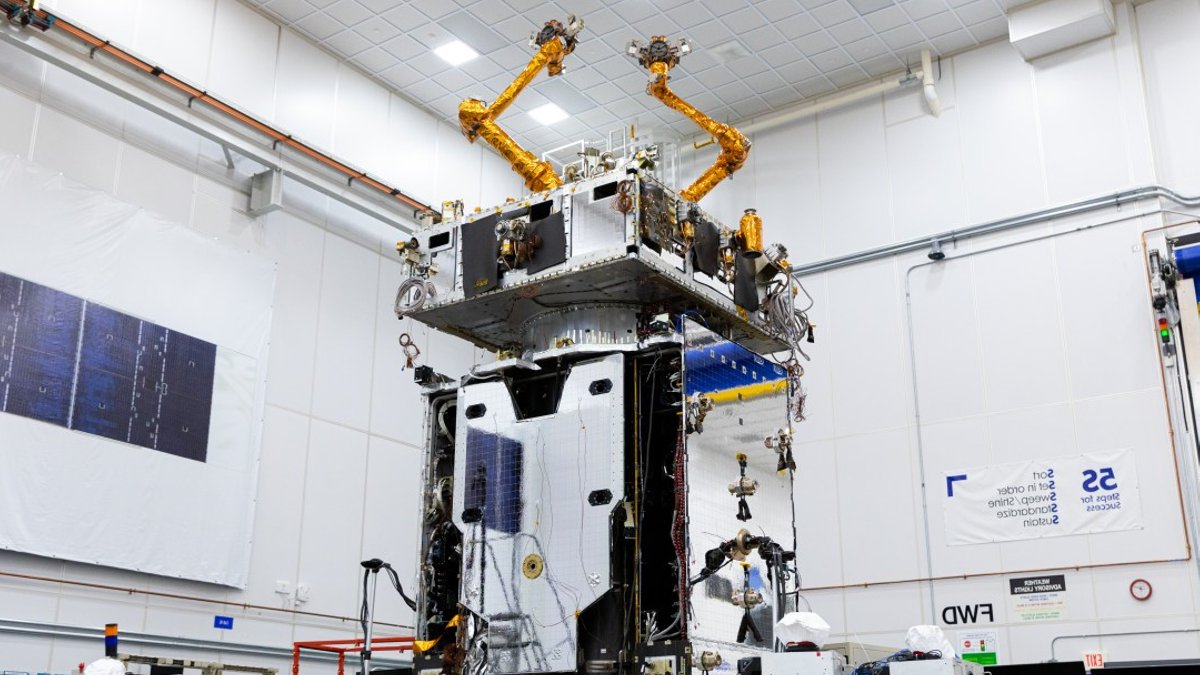
In July, four new Northrop spacecraft launched into orbit on a SpaceX Falcon 9 rocket. One is called the Mission Robotic Vehicle (MRV), a powerful satellite equipped with two advanced robotic arms that was developed by DARPA, the U.S. military research organization.
Related: Gates and Kianni aware of Phia scandal
The other three are called Mission Extension Pods, or MEPs, smaller, simpler satellites that are essentially modular propulsion systems. Those four spacecraft are currently headed for targets around 27,000 miles above the Earth.
In 2027, the MRV will use its robotic arms to attach one of the MEP pods to the Optus satellite, which should keep it in orbit for years to come. Satellites that provide communications or scan the planet with various sensors only last for so long.
They typically fail when they run out of fuel to stay in the right place, not because their computers and transceivers stop working. The Optus satellite was launched in 2009, and designed for a 15-year lifespan. If all goes well, the satellite could fly — and generate revenue — for another six years.
Cheaper launch costs and lower-cost space components are making spacecraft repair missions a reality. The goal is to create a sustainable space architecture, according to Northrop’s director of logistics and servicing, Cassie Wong.
Related: X Settles Advertiser Lawsuit
There are two MEVs in orbit right now, launched in 2019 and 2020, which have provided life extension to three customers, including two different Intelsat spacecraft and the Optus satellite, giving them 10 years of extra life.
The Mission Robotic Vehicle, or MRV, represents an evolution of the business model. Satellite operators buy and own the MEPs, which are permanently attached to their spacecraft. That frees up the MRV to service more vehicles, creating a cheaper offering.
The offering requires some serious technology chops. The vehicles need to autonomously approach one another and dock safely, not a simple task when both are moving at velocities of thousands of miles an hour.
Related: Bezos eyes purchase of sports team
Unlike most satellites, the MRV is designed to be refueled in orbit — in part, a proof of concept for the kind of capabilities other satellites will need if this kind of in-orbit servicing becomes a norm.
Right now, the extra cost and weight of such adaptations keeps spacecraft operators from investing in them. Indeed, the current trend in satellites is flying lots of cheap, effectively replaceable spacecraft in low orbits, as Starlink and Amazon LEO do.
On the other hand, spacecraft keep getting bigger, and there are plenty of expensive, large satellites in orbit that could benefit from life extension. Wong hopes that the MRV will take on other missions in the future, adding new components to satellites as well as adjusting their orbits.


