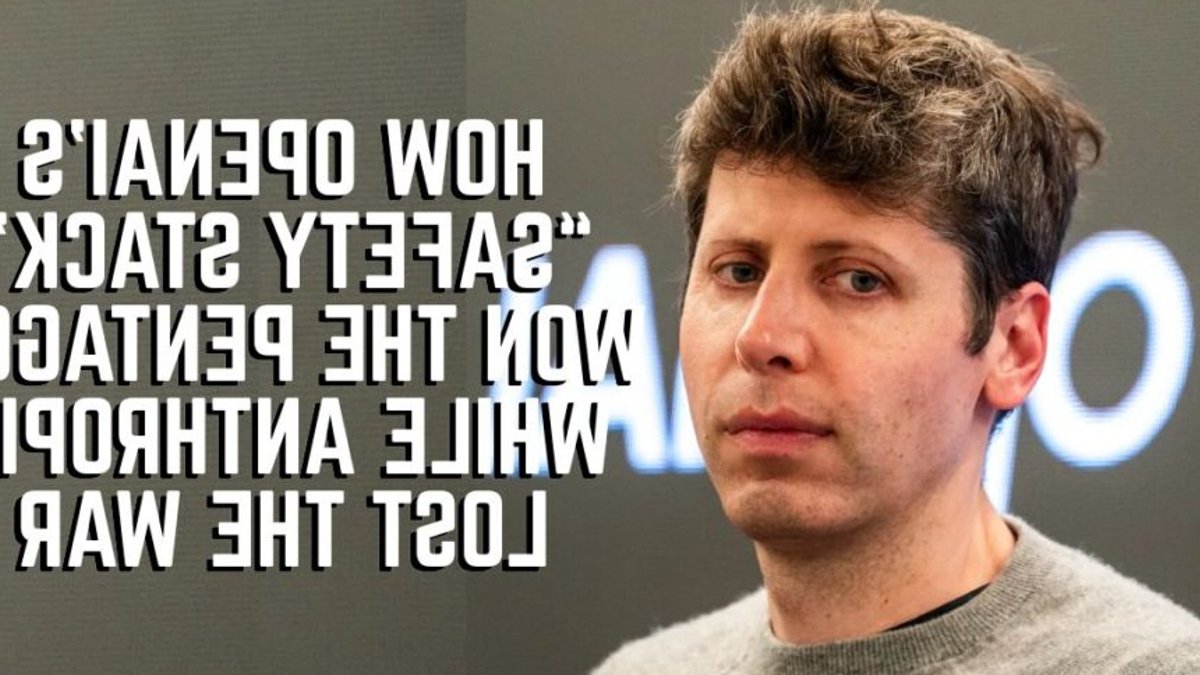
The American tech-state relationship has undergone a significant shift, with the Pentagon and OpenAI forming a landmark partnership. This move marks a departure from the previous standoff between the Pentagon and Anthropic, a company that had attempted to draw clear boundaries in its negotiations with the Department of Defense.
Anthropic’s stance, which included a total prohibition on the use of its models for mass domestic surveillance and the development of fully autonomous weapons, was met with retaliation from the administration. Secretary of Defense Pete Hegseth characterized Anthropic’s stance as an attempt to “seize veto power over the operational decisions of the United States military,” and the company was subsequently designated as a “supply-chain risk.”
The Fallout for Anthropic
This designation, which is the corporate equivalent of a severe penalty in the defense sector, has effectively barred any contractor or partner doing business with the U.S. military from commercial activity with Anthropic. President Trump has also ordered a six-month phase-out of all Anthropic products across the federal government, dealing a significant blow to the company’s commercial prospects.
Read Also: Startup uses tech to fight Nigeria’s land fraud crisis
Anthropic’s CEO, Dario Amodei, has signaled that the company will challenge the designation in court, citing the need to preserve the democratic foundations of the technology. Amodei stated that the company “never raised objections to particular military operations nor attempted to limit use of our technology in an ad hoc manner… [but] in a narrow set of cases, we believe AI can undermine, rather than defend, democratic values.”
Meanwhile, OpenAI CEO Sam Altman has secured a contract to deploy his company’s models within the Department of War’s classified networks, with the same protections that led to Anthropic’s blacklisting. This move has raised concerns about why the government accepted terms from OpenAI that it deemed a “national security risk” from Anthropic.
OpenAI’s Strategic Maneuvering
Altman’s agility has been credited with securing the deal, as he framed the agreement as a way to “de-escalate away from legal and governmental actions and towards reasonable agreements.” By calling on the Department of War to offer the same terms to all AI companies, Altman positioned OpenAI as the industry’s advocate, while Anthropic remained sidelined by its own perceived intransigence.
Read Also: China outpaces rivals in key tech advancements
The centerpiece of the deal is a “safety stack,” a proprietary layer of software that OpenAI engineers will build and maintain directly within the Pentagon’s classified infrastructure. This move has been seen as a new definition of technical control, with OpenAI deploying its own engineers alongside military personnel to ensure the model “behaves as it should.”
The “safety stack” includes a mechanism that allows the model to refuse a task based on its safety training, with the agreement stipulating that the government will not force an override. This creates a historical anomaly, with a private corporation’s lead engineer holding a digital kill-switch within the nation’s most sensitive command-and-control networks.
As the details of the partnership continue to emerge, it has become clear that the “safety stack” will be a critical component of the Department of War’s classified networks. The fact that OpenAI engineers will be working directly with military personnel to ensure the model’s safety and efficacy has raised concerns about the boundaries between the public and private sectors in the development of AI technology.
Read Also: China Moves to Reshape Crypto Amid Trump Era
The partnership between OpenAI and the Department of War has also sparked internal debate within the company, with a coalition of over 60 OpenAI employees and 300 Google employees signing an open letter siding with Anthropic’s ethical stance. This rift highlights the growing tension between the executives who deploy AI models and the employees who build them.
The timing of Altman’s announcement has also raised concerns about the alignment of power between the state and private corporations.
The Future of AI Development
The precedent set by the OpenAI-Department of War partnership is likely to have far-reaching consequences for the development of AI technology. As AI becomes the central nervous system of modern warfare, the “safety stack” will face its ultimate test. The issue of whether a line of code can truly countermand a General’s intent will be answered in the heat of battle. The code has been written, but the war has only just begun, and the outcome will depend on the ability of the “safety stack” to ensure that the model behaves as it should.


