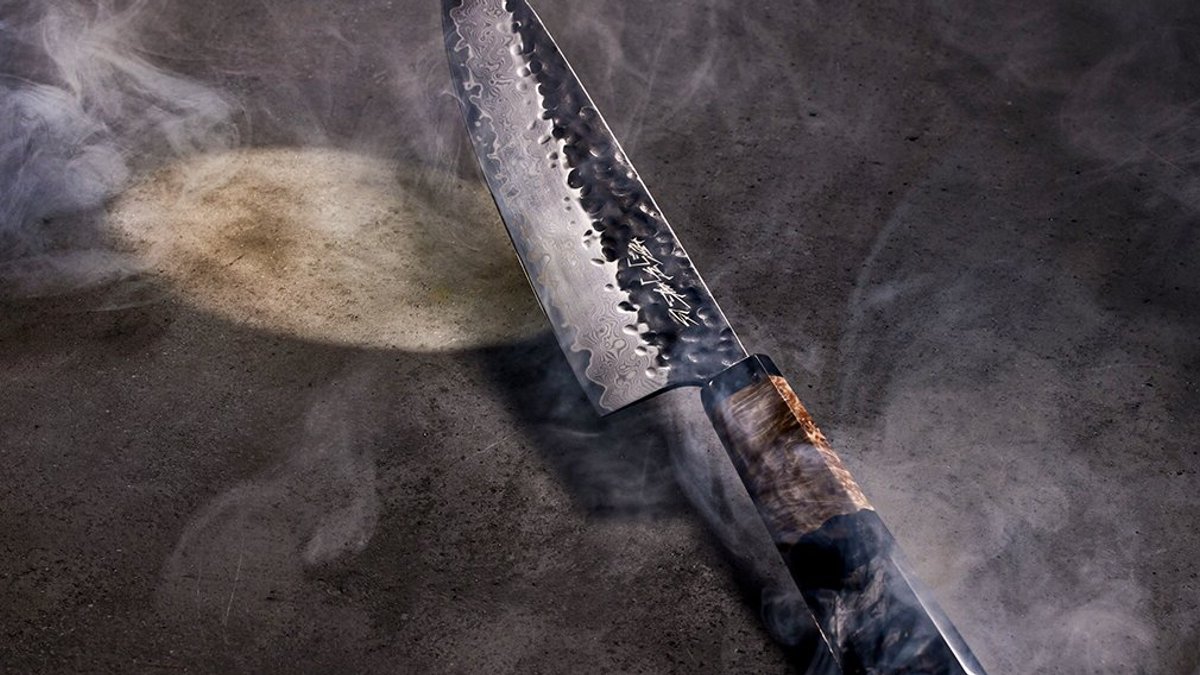
The Tsuki, a Japanese chef’s knife with a split handle and Damascus steel blade, is being crowdfunded as both a kitchen tool and a piece of functional art.
A blade that looks like moonlight on water
The knife features a 67-layer Damascus steel blade with a VG-10 core, a high-carbon stainless steel valued for its sharpness and resistance to corrosion. Its pattern mimics moonlight on water, enhanced by a hand-hammered finish. The edge is double-beveled, allowing use by both right- and left-handed cooks.
The handle is made from Sakura Birch, selected for its tight grain and strength. Each piece is polished to highlight its natural grain, ensuring no two handles are the same. A translucent reinforced resin cap, available in black or white, completes the design. Weighing just over 5 ounces, the knife is balanced to reduce hand fatigue during extended use.
Designed for cooks, packaged for collectors
Yebisu Yaiba positions the Tsuki as a versatile tool for beginners and experienced chefs alike. The Kickstarter campaign offers the knife at $142, a discount from the planned $219 retail price. A set including the chef’s knife and a smaller petty knife is available for $226, compared to the expected $359 retail. Both come in a Paulownia hardwood box secured with an “Ume-musubi” knot, a traditional Japanese decorative method.
Additional whetstones and a leather strop can be added for sharpening. The campaign has attracted nearly half a million dollars from over 1,500 backers, though crowdfunding risks remain, particularly since this is the company’s first Kickstarter. Yebisu Yaiba does sell other knives through its online store, which may provide some confidence to potential buyers.
Orders are scheduled to ship worldwide in December, with shipping costs calculated after the campaign closes. U.S. deliveries start at around $15.
The Tsuki’s design and presentation make it appealing for display. The wood grain, layered steel, and hand-finished details transform a common kitchen tool into a statement piece. However, its practical features—weight, balance, and edge retention—will determine its usefulness in daily tasks.
The approach isn’t unique, but few knives emphasize aesthetics as strongly as performance. Most kitchen knives focus on function, yet this one merges the two. Cooks will decide whether they prefer a tool that fades into the background or one that stands out even when not in use.
For those interested in how materials can store energy, the knife’s layered steel shares a conceptual link with liquid that changes color while retaining functionality.


